Fasset Hits $1 Billion Valuation After Raising $119M
By Lidia Yadlos
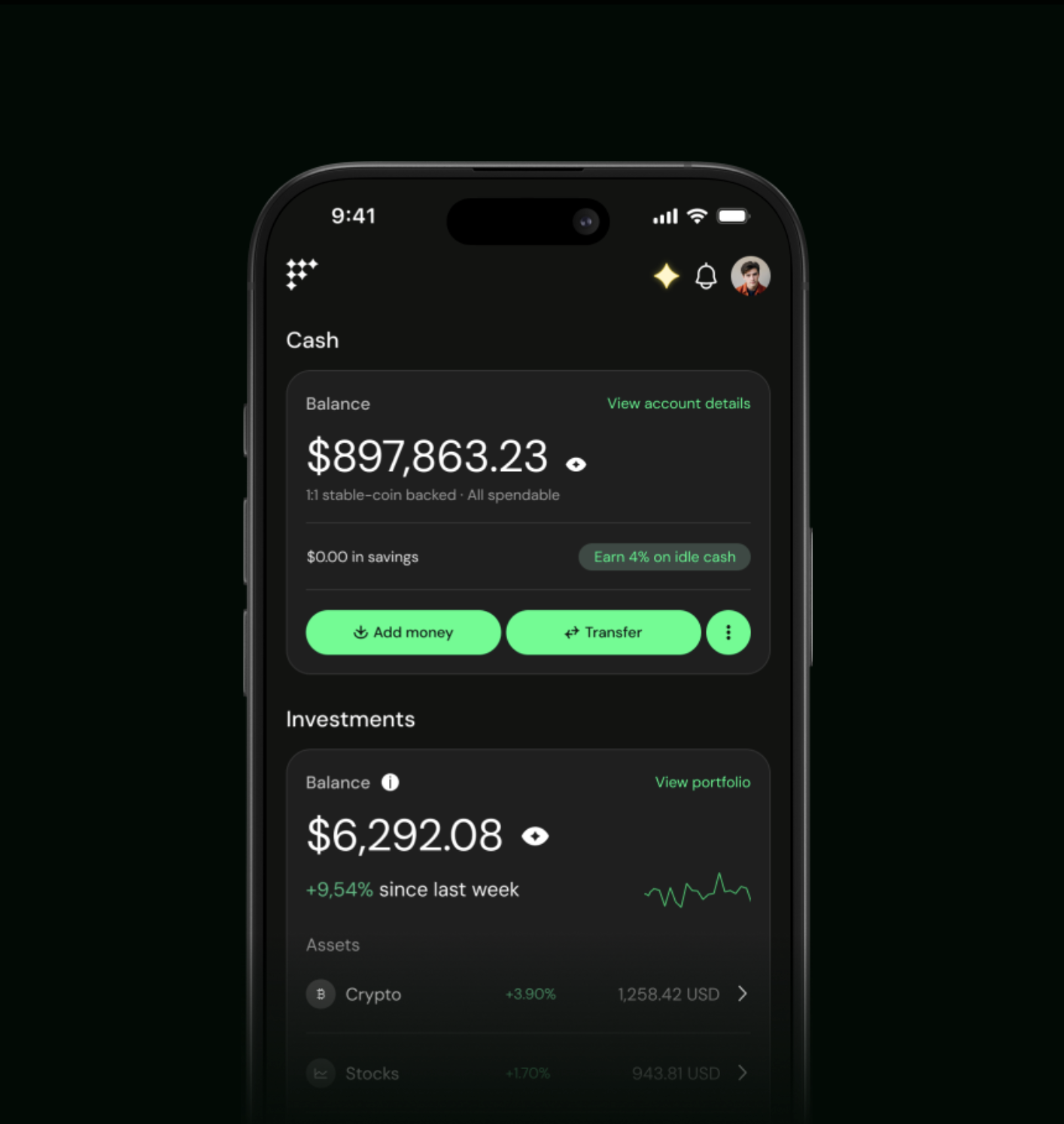
Fasset has raised $119 million in just four months, turning the stablecoin neobank into crypto's latest unicorn.
The company announced a $68 million Series C at a $1 billion valuation, led by Japan's SBI Group, only three months after closing a $51 million Series B in May. Speedinvest also joined Fasset's investor base through the earlier round.
The rapid fundraising comes as Fassetscales a business already processing more than $40 billion in annualized transaction volume, with over 3 million wallets, more than 1,000 enterprise customers and operations spanning 125 countries.
The new capital will go toward expanding Fasset's stablecoin settlement infrastructure and developing AI systems designed to automatically route money across currencies, payment networks and international banking corridors.
Building Stablecoin Rails Behind the Bank Account
Fasset describes itself as a stablecoin neobank, but customers aren't expected to think about blockchain infrastructure every time they move money.
Its platform allows individuals and businesses to receive, hold, spend and invest across currencies and asset classes through a single financial account. Behind that interface sits Own Network, Fasset's infrastructure connecting banks, payment processors, telecom companies, liquidity providers, custodians and settlement networks.
The network currently reaches more than 100 banking corridors.
Stablecoins operate as one of the settlement layers underneath that system, allowing value to move between markets without requiring customers to manually interact with blockchain wallets or choose settlement networks themselves.
Fasset is now adding more AI to that infrastructure. Its systems are being developed to determine how transactions should move based on variables including cost, speed, available liquidity and payment-rail availability.
SBI Wants a Global Stablecoin Network
The Series C significantly deepens Fasset's relationship with SBI Group, one of Japan's largest financial conglomerates.
SBI operates across banking, securities, asset management and private equity and has spent years building a substantial digital asset portfolio. Its investments and partnerships span companies including Ripple, Circle and Morpho, while crypto liquidity provider B2C2 sits within the wider SBI group.
For SBI, the Fasset investment fits into a much larger plan to build an Asia-Pacific digital economy connected through blockchain-based financial infrastructure.
"Fasset's vision of a world in which money moves across borders as easily as information does points in the same direction as the on-chain economic zone that the SBI Group seeks to realize through digital finance," said Yoshitaka Kitao, Chairman, President and CEO of SBI Holdings.
SBI sees stablecoin-powered international payments as a core part of that strategy, particularly across Asia-Pacific, the Middle East and Africa.
Fasset's existing partnership with SBI Remit gives it access to a remittance network supporting bank-account transfers across approximately 200 countries.
From Neobank to "Any-to-Any" Banking
Fasset CEO and co-founder Mohammad Raafi Hossain has a much broader ambition for the company than building another crypto banking app.
Rather than competing solely as another stablecoin issuer, the company is building the infrastructure connecting stablecoins with existing banks and payment systems.
With $40 billion in annualized transaction volume, Fasset is already processing an amount equivalent to more than half of its new $1 billion valuation every week.
The Series C gives it additional capital to expand that model internationally, while SBI provides something potentially more valuable than funding: access to a global financial ecosystem capable of connecting Fasset's crypto-native infrastructure with traditional banking.
After raising more than $150 million since its founding in 2019, Fasset's next challenge will be proving that stablecoin neobanking can scale from an alternative financial product into infrastructure capable of competing with the banking rails it was originally built around.
Published on Across