Consensus Miami: Stablecoins, Bitcoin Rails, and Infrastructure Take the Lead
By Lidia Yadlos
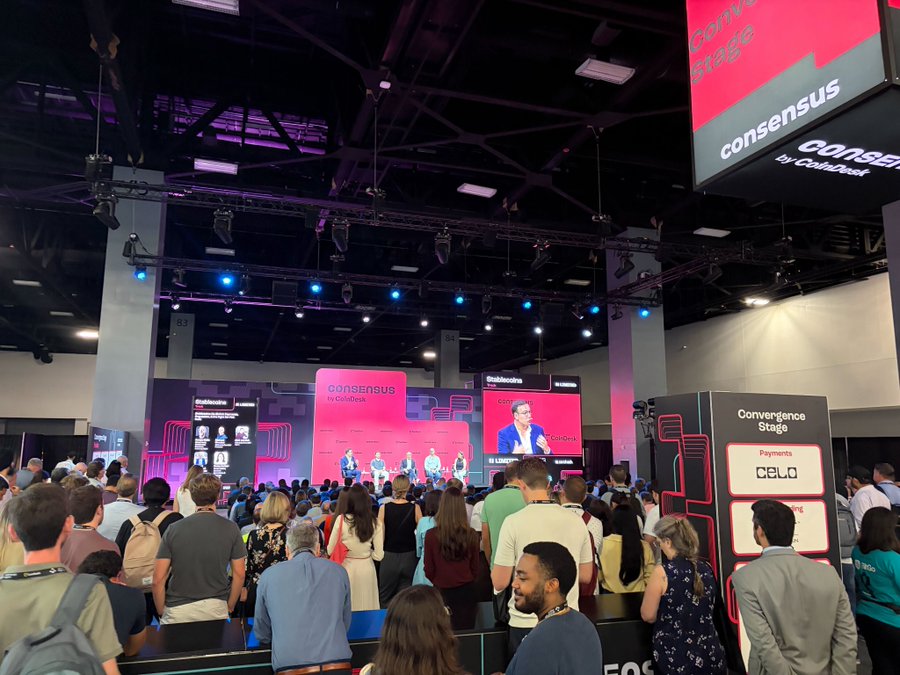
Consensus Miami 2026 has so far delivered on every front.
Packed rooms, nonstop meetings, and a steady flow of side conversations have turned the week into a high-signal networking environment — with founders, institutions, and builders actively forming partnerships for the next phase of the blockchain cycle.
The overall sentiment on the ground has been strong. From quick conversations to deeper meetings, the feedback is consistent: Consensus continues to stand out as one of the industry’s most effective places to connect, collaborate, and get deals moving.
Against that backdrop, the first two days have also brought a wave of announcements — spanning stablecoins, tokenized assets, infrastructure, and new financial rails.
Here are some of the key highlights so far:
Day 1: Bitcoin Activation, Stablecoin Rails, and Tokenized Markets
Day 1 leaned heavily into one theme: unlocking real utility across existing crypto systems.
Tokenization Meets Capital Markets
Bullish announced a $4.2 billion acquisition of Equiniti, positioning itself as a global transfer agent for tokenized securities.
This isn’t just an M&A deal — it’s a direct move toward blockchain-native capital markets infrastructure, where equities and financial assets can be issued and managed onchain.
Bitcoin: From Store of Value to Productive Asset
Babylon Labs and GoMining revealed plans to integrate trustless Bitcoin vault infrastructure.
The model is simple but powerful:
Lock BTC in vaults
Borrow against it programmatically
Deploy it into mining operations
The initial rollout targets up to 1,000 BTC (~$75M) — a step toward making Bitcoin yield-generating without bridging or giving up custody.
At the same time, GoMining introduced GoBTC, a protocol designed to enable free and instant Bitcoin payments on the base layer, targeting a long-standing gap in BTC usability.
Bridging Crypto and Cash
Kraken partnered with MoneyGram to enable crypto-to-cash withdrawals across 100+ countries and hundreds of fiat currencies.
This directly addresses one of crypto’s biggest friction points: off-ramps. By combining Kraken’s infrastructure with MoneyGram’s global network, users can move from digital assets to local cash at scale.
Solana Trading Infrastructure Levels Up
Jito Labs introduced JTX, a self-custodial trading platform built for advanced Solana traders.
JTX brings:
Professional order types
CEX-grade execution
Onchain custody
It’s designed to remove the need for traders to leave the chain for performance — a key step in keeping liquidity on Solana.
Compliance and Identity Go Cross-Chain
Sumsub partnered with Chainlink to enable cross-chain identity verification using Chainlink’s compliance infrastructure.
As regulation increases, the ability to verify users across multiple chains without compromising privacy is becoming essential infrastructure.
AI + Crypto Infrastructure Emerges
OwlTing launched a self-custody wallet built for AI agents, allowing autonomous systems to manage and transact stablecoins.
The wallet integrates directly with AI assistants, pointing toward a future where agents can operate financial tools without manual setup.
Stablecoins Go Global at Scale
Figo launched a stablecoin-powered USD card operating across 50 countries, targeting regions where dollar access is limited.
Users see USD — but the rails underneath are USDC.
It’s a practical example of stablecoins reaching the “global majority,” particularly in markets where traditional banking infrastructure is weak.
Banks Begin Moving Onchain
Bamboo Block entered the community bank market, aiming to enable live stablecoin payment flows by 2026.
At the same time, OMINEX launched enterprise-grade verification systems designed for institutional digital asset markets.
The direction is clear: compliance and banking infrastructure are catching up quickly.
Day 2: Scaling Stablecoins and Onchain Systems
If Day 1 unlocked use cases, Day 2 focused on scaling the systems behind them.
Solana Pushes Into Institutional Markets
Jito Foundation partnered with Solana Company to expand validator infrastructure across Asia-Pacific.
The focus: institutional-grade execution, yield optimization, and scaling Solana adoption globally.
Prediction Markets Go White-Label
Shift Markets launched a white-label prediction markets platform, allowing operators to integrate event-based trading directly into their platforms.
From politics to macro and sports, prediction markets are moving from niche to integrated product category.
Building the Operating System for Money
Mesta expanded beyond payments after reaching $1 billion in TPV in under 15 months.
With four new products, Mesta is positioning itself as a full operating system for fiat and stablecoin flows, covering the entire lifecycle of money movement.
Celo Connects Real Usage to Developer Infrastructure
Celo went live on Bridge, bringing:
600K+ daily users
1.28B lifetime transactions
$65B+ in stablecoin volume
into developer tooling.
This isn’t theoretical adoption — it’s infrastructure connected to real usage.
Onchain Credit Expands Globally
Celo, Textile, and Tala are launching a $2M global lending pool, targeting emerging markets.
The model combines:
Onchain credit infrastructure
AI-based underwriting
Non-custodial wallets like MiniPay
The goal: expand access to capital where traditional systems fall short.
Stablecoins Become Default Financial Rails
Galaxy Digital added USDC deposits to GalaxyOne, reinforcing stablecoins as a 24/7 settlement layer.
With stablecoins now a $317B market, they’re increasingly being used for savings, transfers, and payments globally.
Fixing Crypto’s Biggest Operational Gap
Notabene launched Revert, a post-settlement coordination layer.
For the first time, institutions can:
Coordinate returns of funds
Meet regulatory requirements
Manage transaction corrections
This addresses one of crypto’s biggest limitations — irreversibility.
Closing
Across both days, one pattern stands out:
Bitcoin is becoming productive
Stablecoins are becoming infrastructure
RWAs are moving into real markets
Execution and compliance layers are catching up fast
Three days of nonstop networking here in Miami are helping shape the next global growth cycle.
What’s happening now will ripple outward — powering a world that becomes increasingly digitized, often quietly, but in ways that make everyday life more seamless and practical.
At the same time, the intersection of blockchain and the emerging AI-driven economy is becoming impossible to ignore. These systems aren’t developing in isolation — they’re converging.
It’s hard to overstate how early — and how significant — this moment feels. There’s never been a more exciting time to be building in this space.
Published on Blockster
Consensus Miami: Stablecoins, Bitcoin Rails, and Infrastructure Take the Lead